Deep-sky observation
The Ghost of Cassiopeia
Spot IC 63 in my photograph and find out how a bright star makes this faint cloud of gas and dust glow.
Watch the video ↓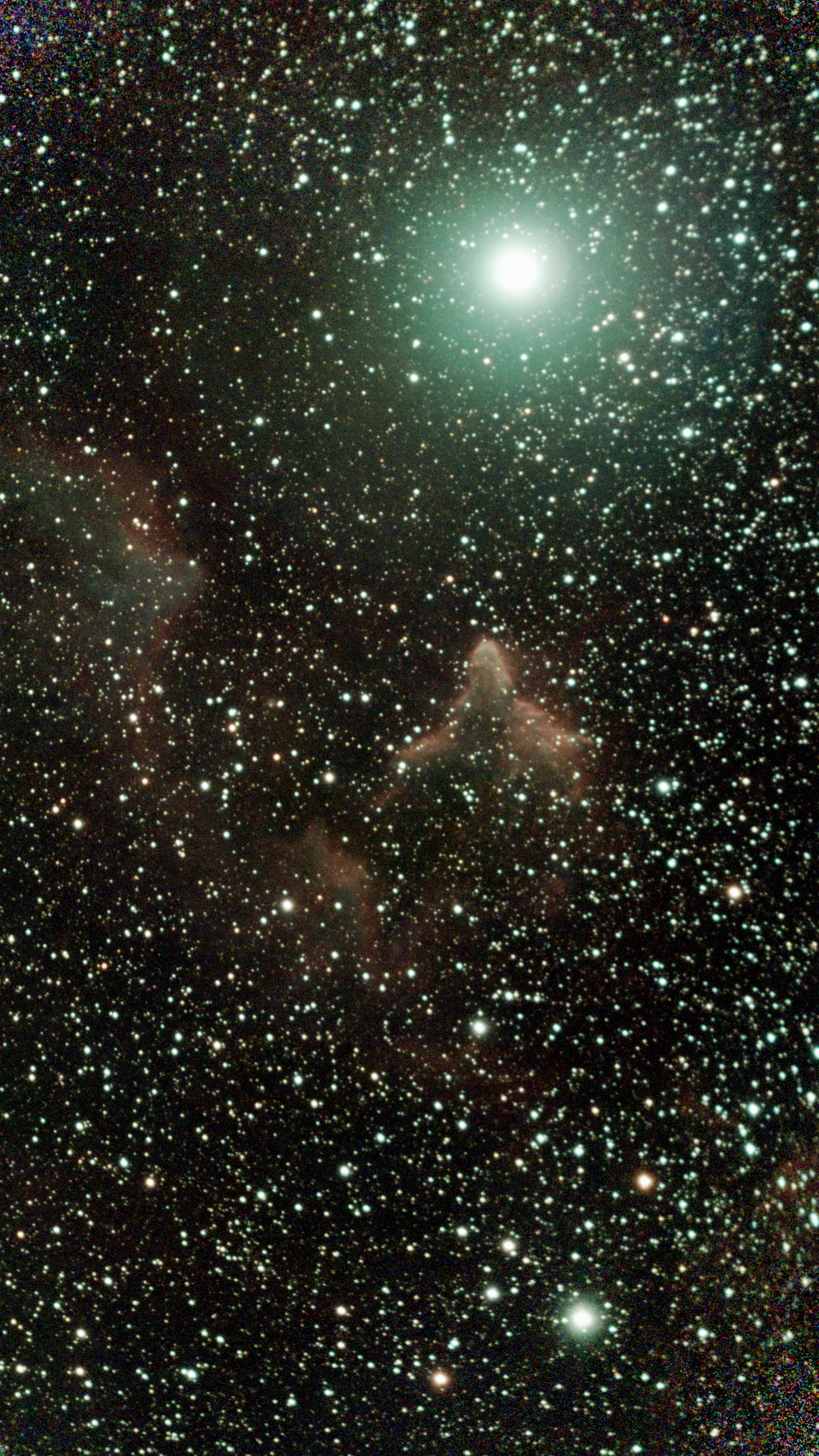
Can you spot the ghost?
Start with the brightest star in the photograph, Gamma Cassiopeiae. Then look just below it. The faint red shape looks like a figure with its arms outstretched. That little patch is IC 63, a cloud of gas and dust about 550 light-years away.
What makes it glow?
Gamma Cassiopeiae pours ultraviolet light into the surrounding cloud. That radiation ionises hydrogen, stripping electrons from its atoms. As electrons reunite with hydrogen nuclei, some of the light they give off is deep red. Astronomers call that red light hydrogen-alpha, or Hα. Dust in the cloud also scatters light from the star, adding a bluish reflection.
Watch the video
Take a closer look at the Ghost of Cassiopeia in my video.
Find the field yourself
Look for the familiar W of Cassiopeia. Gamma Cassiopeiae is the middle star of the five that trace it. You can see the star with the naked eye. The nebula is much fainter, so use the star to frame the field, then stack multiple exposures to bring out the cloud. Compare your image with the photograph above and see whether you can pick out the ghostly outline.
Comments